|
Vitamin D benefits |
||
|
|
||
|
|
||
|
Vitamin D
Vitamin D New Revelations on its Hidden Benefits Recent studies may cause the Institute of Medicine to increase our recommended daily intake Around the world, a blizzard of studies have emerged recently showing that vitamin D seems to be a significant contributor to determining how long we live. It is now seen as playing a role in reducing the risk of cardio- vascular disease, breast cancer, pancreatic cancer, and diabetes. Cardiovascular disease is currently the leading cause of death in the USA and many other countries. Cancer is second, and diabetes is sixth. The chance to reduce our risk in these areas simply by taking vitamin D is what has gotten people excited. Typically, claims for benefits provided by vitamins and other supplements come from only a few sources, and are met with considerable skepticism. With vitamin D, the positive results from each new study have triggered more researchers to jump in and do their own work. The PubMed database of international medical literature shows that 2,274 studies referencing vitamin D have been published in this year alone. Food industry experts have been reported to be exploring ways to use vitamin D in fortifying more products. Doctors are also looking into increasing the recommended daily intake of vitamin D. The Institute of Medicine has appointed a committee to look into this, with recommendations now wending their way through review. The current daily intake guidelines for vitamin D are: 200 IU -- for people under 50 400 IU -- for people 51 to 70 600 IU -- for people over 70 (Note: IU means international units, which is the number printed on the bottle when you buy supplements at the store.) . The normal way we get vitamin D is from daily exposure to sunlight. However the growing concern over skin cancer has caused most of us to avoid exposure, or to wear sunscreen and sunblock. In terms of food intake, vitamin D occurs naturally in some fatty fish such as salmon. Other foods such as milk have already been fortified with vitamin D, though in realtively small amounts. As a result, there is a widespread deficiency of vitamin D in most people. In supplements, the traditional role for vitamin D was as a mundane helper for the absorbtion of calcium. That caused calcium tablets to be boosted with a modest amount of vitamin D. I was taking calcium softgels which contained 500 IU of vitamin D. But after reading about all the research findings, I recently switched to calcium softgels with 1000 IU of vitamin D. (Current medical guidelines say we can safely take up to 2000 IU per day.) Eventually the appropriate board will get around to raising the vitamin D intake guidelines for people of all ages, but there is no reason why we have to wait. If living a longer life is of interest, and you are not taking a vitamin D supplement yet, it is something to consider. Sources: New York Times, Los Angeles Times and National Institutes of Health. We do not give medical advice, consult your healthcare provider. Related article: Vitamin D deficiency and hair loss
Share this with your friends. Just copy this line: |
Great Health Enjoy a younger body and a longer life. Because your health is much more under your control than most of us imagine. Here we consult experts who share with us their latest insights and solutions.
Boomers Life Welcome to one of the most popular Baby Boomer sites on the web. Everyone born between 1946 and 1964 is a Boomer just like us. And even though we may have challenges facing us, we also have an open future ahead. His ongoing campaign is to help us enjoy all the good things we have. This is our world. Special Pages Do Boomers still care? Protests then and now
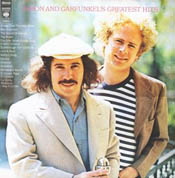
Simon and Garfunkel - Greatest Hits
Share a smile with a friend. Tell them about this site. Just copy this line: and post it on Facebook, on Twitter, or on your blog. A smile a day keeps the doctor away.
BoomersLife.org Contact Us Our comment boxes were drawing spam, so instead you are welcome to email your comments to me for posting on this site. Or just to say, hey! John Tremain Health Editor © 2008-2024 Boomerguy
|
|
|
living longer, healthier, happier with a more youthful body |
||
|
Our purpose is to help rebuild the Boomer community, and our justifiable pride in it, as well as to enjoy a better life for ourselves and those important to us. May all the best be yours. |
||
|
music, people and issues of interest to Boomers |
||
|
|
||












 Photographs
and artwork are original on this site, or permission was obtained for
images clearly copyrighted. Other images such as record albums are
understood to be in the public domain for fair use. If for any reason an
image has been shown for which you are the photographer/artist and were
not consulted, please let us know so that proper permission can be
obtained or the image deleted.
Photographs
and artwork are original on this site, or permission was obtained for
images clearly copyrighted. Other images such as record albums are
understood to be in the public domain for fair use. If for any reason an
image has been shown for which you are the photographer/artist and were
not consulted, please let us know so that proper permission can be
obtained or the image deleted.
